


My name is Dr. James Carter, and I'm a veterinarian. Last year, I opened my own practice — because it finally meant I could do what I believe is right for my patients, not what I was told to do.
I know that sounds strange. But I'm writing this because for years I was in a position where I had no say — and now that I do, I feel it's my duty to say what most veterinary practices stay completely silent about.
The Protocol I Disagreed With
Every pet owner got the same recommendation. If there's tartar on the dog's teeth: anesthetic dental cleaning. Two to four hundred dollars. Done. I didn't ask questions, I didn't argue. That was the protocol.
Since then, I've thought a lot about how many dogs actually needed that procedure — and how many didn't.
"Anesthesia is a serious drug. One of the most fundamental rules in medicine is that we only use it when there's no other option. Yet for a routine dental cleaning, it's applied almost automatically."
— Dr. James Carter, DVMAfter the procedure, dogs can be weak and struggling for days. More than once, owners came back to tell me their dog was dealing with respiratory issues, had become permanently lethargic, or simply wasn't the same dog as before.
But That's Not Even the Biggest Problem
Tartar isn't just an aesthetic issue. The bacteria that build up in plaque inflame the gum tissue, then travel through the bloodstream to reach the organs. Heart, kidneys, liver — all of these are at risk if tartar is left untreated.
And six months after a dental cleaning, if nothing else changes, you're right back where you started. Because nobody told pet owners why it develops in the first place — or that there's a simple, at-home solution available.
A dental cleaning costs $200–$400, and six months later the tartar is back. If nothing changes, that means two procedures a year. The best deal for your vet — and the worst deal for you.
The Real Reason Nobody Talks About
Modern dog food doesn't contain what a dog's teeth actually need. In the wild, dogs consumed a wide variety of foods — including enzyme-rich foods that naturally broke down plaque after every meal.
Today's kibble has none of that. That's the real cause. And until we address it, tartar will keep coming back — no matter how much you spend on anesthetic cleanings.
What I Do Differently at My Own Practice
When I opened my own clinic, I started looking for alternatives. Something that addresses the cause, not just the symptom. Something that doesn't put unnecessary strain on the dog's system. Something simple that any pet owner can do at home.
 Before
 After
After
A natural, enzyme-based water additive. Just a few drops in your dog's water each day — and with every sip, the enzymes begin breaking down plaque.
- Works the way nature intended — with enzymes, not harsh chemicals
- Even existing tartar dissolves within two months
- No anesthesia, no post-procedure lethargy, no unnecessary risk
- No daily brushing battle — just add it to the water and your dog does the rest
- Safe for dogs with allergies and sensitivities
90-day money-back guarantee
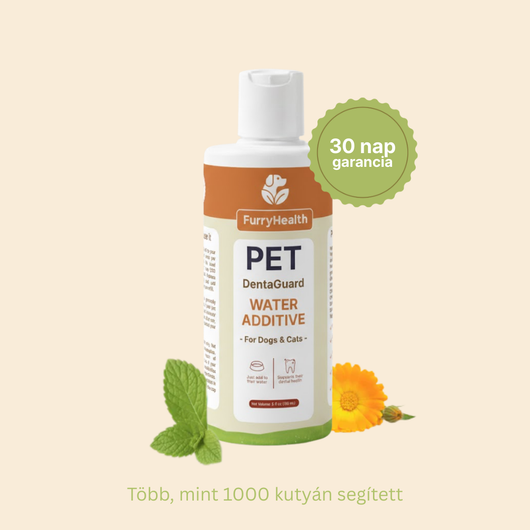
This is what I now recommend to every client at my practice, and the results speak for themselves. Dogs' breath improves, tartar gradually disappears, and owners avoid both the risk and the cost of an anesthetic procedure.
If your dog has tartar, or your vet has recommended an anesthetic procedure, it's worth looking at this product before you make a decision. I'm not saying this because I have to — I'm saying it because if I were a pet owner, this is exactly what I'd want to know.
This article is sponsored content. DentaGuard™ is a dietary supplement, not a medication.